I Do It!”

Both of my youngest grandchildren, ages 4 and 3, have gotten to the “I do it” stage. That means that a major meltdown can be triggered if you don’t, for example, let them put the straw in their own juice box without any help. Public service announcement: Switching it for a new juice box may or may not work.

But isn’t that a problem that we grown-ups can also have: thinking we should be allowed to (or even that we can) do certain things for ourselves or all on our own?

I’m not talking about the desire to do things our own way. That’s an entirely different issue. I am talking about doing things God’s way, but by our own power and will. It just doesn’t work.

The good news is that God does not ask or expect us to live a godly, obedient life on our own. He wants us to be committed to that life. He also wants us to let Him do it. Let me explain.

Even when it comes to the basics, like successfully navigating our own complex lives without stumbling. It takes God. Whatever He does ask us to do, He will give us the power to do, through Christ.

Philippians 4:13 [NKJV] I can do all things through Christ who strengthens me.

Looking to grow your congregation? It is a good thing to want, but you can’t do it.

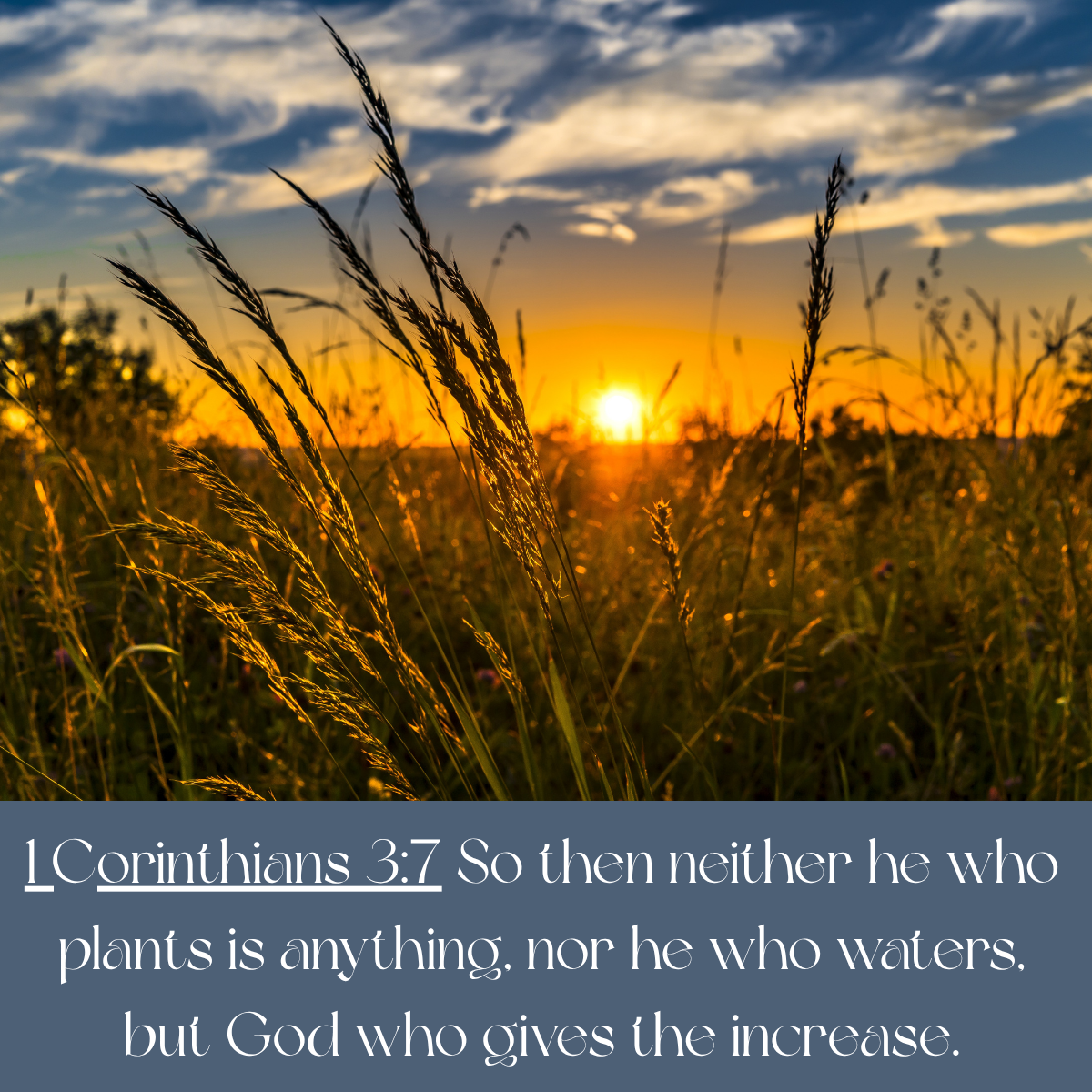
1Corinthians 3:7 [NKJV] So then neither he who plants is anything, nor he who waters, but God who gives the increase.

We can and should plant and water, but we cannot increase the congregation. We have to let God do that.

Much of the book of Proverbs is about getting wisdom. Where do we get that? From God.

James 1:5 [NKJV] If any of you lacks wisdom, let him ask of God, who gives to all liberally and without reproach, and it will be given to him.

I know that the next verse says, “let him ask in faith”. But that faith will be God-given too. We can follow the example of the father who asked Jesus to cast out the demon that was torturing his son:

Philippians 4:13 [NKJV] I can do all things through Christ who strengthens me.

Mark 9:24 [NKJV] Immediately the father of the child cried out and said with tears, "Lord, I believe; help my unbelief!"

In fact, all the righteous and good qualities that God asks of us are provided to us by the indwelling of the Holy Spirit, as we see in Galatians 5:22-23.

We don’t even need to stir up the “want to” on our own. God will do that for us as well. All we need to do is ask and allow.

Philippians 2:13 [NLT] For God is working in you, giving you the desire and the power to do what pleases him.

An “I do it” attitude will not work when it comes to obedience to God. Everything He asks us to do, He actually does within us. What we really need to say is “God do it”.

I welcome your comments and questions. You can write me in the chat or at Nancy@DynamicChristianMinistries.org.

My Year of Being Brave

A couple of years ago, the enthusiasm a friend of mine showed for picking a word for the year lead me to think “maybe I will give that a try”. And I did.

After reading a book about the concept and doing some soul searching, I decided my word for the year would be “brave”.

I was ready to up my gave of standing up for myself and speaking out for injustice and preaching the gospel. So, I spoke to God about supporting the idea of helping me to become more brave.

Turns out that God was more than willing to do that. Great! Right?

Well, it also turns out that the places and situations where God wanted to help me increase my bravery were not sticking up for myself, speaking out for injustice, or preaching the gospel. At least those did not seem to be His top priority.

Instead, what I found over the course of that year is that I had many opportunities to bravely accept criticism (constructive or not, kindly offered or not) and examine myself to see if it was valid – rejecting the methodology in favor of the opportunity to grow. I found myself in many situations where I had to bravely admit to being at fault, or to needing to improve in areas like communication and especially listening skills.

It was a big year of change and growth for me. Internally. Not sure others noticed my new bravery – certainly not in the way I had hope it would happen. What I came to see is that I was called to be both humble and brave – at the very same time – in these situations.

I have not selected a word of the year since. 😊

Not because I fear what God will do with it. Rather, because I’m asking God to choose the direction of my growth each year instead. That is what is going to happen anyway. That is what happened with my year of focusing on the word “brave”. So, why not just give Him the control of it all?

Proverbs 3:5 [NKJV] Trust in the LORD with all your heart, And lean not on your own understanding;

God is faithful, my sweet sisters. It is great to pick a word of the year. It’s also valid to ask God to pick it. Either way, the main thing is to give Him the reigns of your growth – to trust in Him to know our hearts and what we really need in the form of growth, development, and change.

Again, I am not saying it is wrong to pick a word to focus on for the year. I’m just saying, either way, the main thing is to trust in the Lord for how it goes.

Psalm 115:10 says, Oh Israel, trust in the Lord: He is their help and their shield.

He is our help and shield too.

I encourage you to be brave and humble, sweet sisters – whether you choose a word of the year or not.

I welcome your comments and questions. You can write in the comments section or email me at Nancy@DynamicChristianMinistries.org

Destined for More: The Downside

If there is a potential downside to stepping into your God-led destiny. That down side is that once God has done amazing things through you and for you, you might start thinking that YOU are responsible for your success – that you deserve some of the glory. And that is the sad ending of more than one story of someone whom God raised up from ignominy to greatness.

Not everyone, though.

King Saul is one example. Taken from a future as a donkey finder for his father, God raised him up to be the first king of Israel. And Samuel, who anointed Saul in the first place, and advised him in the early years of his reign had to deliver the indictment of Saul for God.

1 Samuel 15:17-19(first half) [NKJV] 17 So Samuel said, "When you [were] little in your own eyes, [were] you not head of the tribes of Israel? And did not the LORD anoint you king over Israel? 18 "Now the LORD sent you on a mission, and said, 'Go, and utterly destroy the sinners, the Amalekites, and fight against them until they are consumed.' 19 "Why then did you not obey the voice of the LORD?”

Saul, who was not elected, but rather chosen by God, began to act like his purpose was to please the people, and then he blamed them for the debacle.

Miriam, who was just a slave in Egypt, gained notoriety as the sister of Moses. She lead the women in song and dance after the people successfully came through the Red Sea and watched the army of Egypt destroyed. Her brother, Aaron, likewise, rose to power because God had chosen Moses, and given Aaron the task of speaking for him before the Pharoah.

Both of them began to speak against Moses.

Numbers 12:1-2 [NKJV] 1 Then Miriam and Aaron spoke against Moses because of the Ethiopian woman whom he had married; for he had married an Ethiopian woman. 2 So they said, "Has the LORD indeed spoken only through Moses? Has He not spoken through us also?" And the LORD heard [it].

Contrast that with someone like Mary, Jesus’s mother. She started as an unknown virgin, engaged to be married, and God gave her the honor of carrying our Savior in her womb. She was humble then (see Luke 1:26-39). And she never strayed from Jesus’ side through His sacrifice, where she stayed at His feet, enduring a mother’s worst nightmare with her son and Savior.  

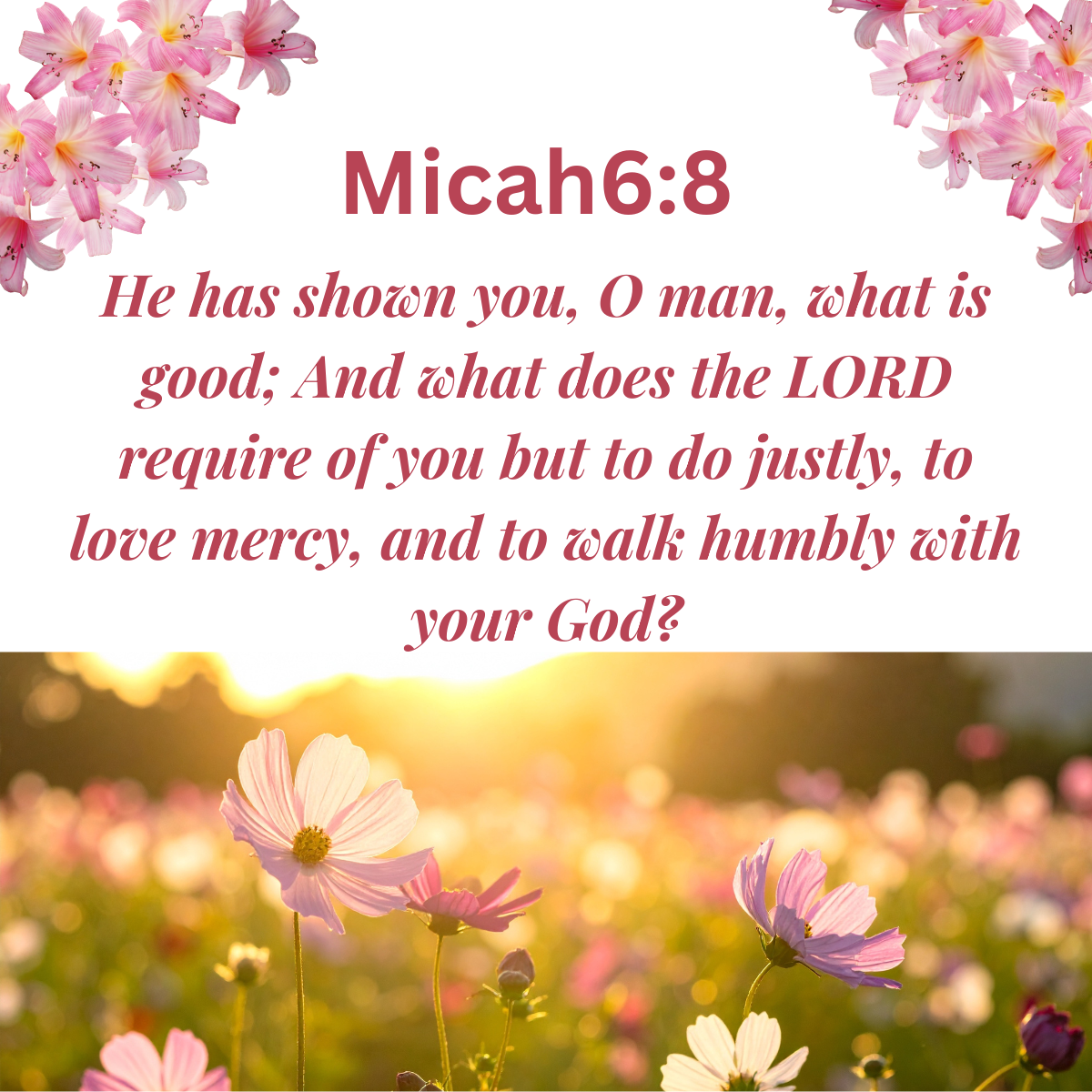
Micah 6:8 [NKJV] 8 He has shown you, O man, what [is] good; And what does the LORD require of you But to do justly, To love mercy, And to walk humbly with your God?

If we studied all of those who were plucked out of ignominy into service of the Lord, we would find that the key characteristic of those who did not fall and Saul did was enduring humility.

Witness further the 11 disciples who society would have destined to be struggling fishermen all their lives – like their fathers before them. They struggled with fear and faith in the dark times, but, with little exception, they understood that the miracles they performed, and the calling they were chosen to fulfill, were all because of Jesus and not their own doing. They understood that this was not something they earned or deserved or gained by their own power.

Therefore, God was able to continue using them.  

Humility, it seems, it the antidote to letting all the blessings and provisions of God, including God-bestowed power and authority, go to your head. Simple. Right? Seems that, when it comes to human nature, maybe humility is not so simple to stick to. Thankfully, humility is available and is a lot easier to stick to if we focus on sticking close to Jesus.

I welcome your comments and questions. You can write me in the chat or any time at Nancy@dynamicchristianministries.org

Destined for More: Giddy Up

One of the most fun “destined for more” stories is that of Gideon.

Gideon lived in the time of the judges. Things were not good. Midianites had so plagued God’s people that when we first meet him, Gideon is hiding out in a winepress, secretly threshing wheat, in hopes that they won’t catch him and take away his food.

Imagine Gideon’s surprise when the angel of the Lord shows up and greets him as “you mighty man of valor”. I don’t know what more you could ask for as proof that God sees us differently than we see ourselves.

God knew the plans He had for Gideon – plans He would ensure came to pass in a most unusual way.

After the angel assures Gideon that God will use him to save Israel from the Midianites (whom Gideon had just been hiding his wheat from), he provides Gideon with a first task – that is, tear down his own father’s altar to Baal.

Having seen an angel and received a message and assurances directly from God through him, Gideon is still too fearful of his father’s household and the local men to do this first task in the daylight. He does it under cover of darkness. And sure enough, if his father had not intervened, the men of the town wanted to kill Gideon once they found out it was him.

Thankfully, Gideon’s father intervened and he was spared. Good thing too, because Gideon was about to need to man up as the Midianites and Amalekites gathered for battle. Now he begins to gather an army.

Still unsure of either himself or God, with an army amassed behind him, Gideon twice asks God to miraculously prove that Gideon himself is actually the one through whom God will save Israel.

Don’t we all struggle at times to step into the destiny for which God has called us – at least at first? I heard Beth Moore (author and Bible teacher) say that the problem with Israel when they actually got to the promised land, and the spies came back with the report of giants, was not that they did not believe God could conquer those giants. Instead, it was they the Israelites did not believe God could use them to do it.

And aren’t we the same? We know and trust the power of our God. We know He can heal, walk on water, calm the storm, perform miracles – we just don’t think that we can be the tool He uses.

Back to Gideon. He did not seem to feel that he was up to the task at hand. But that did not matter. It would not be Gideon’s abilities that won the day.

And God went to extreme measures to prove that. First, he culled down Gideon’s army to just 300 men to go out against the vast armies of the Midianites and Amalekites. Then He sent Gideon into the Midianite came to eavesdrop on one soldier of the Midianites telling his dream about a loaf of barely bread tumbling into the camp, and collapsing his tent. His companion interpreted that as the “sword of Gideon” and the Israelite God would deliver them into his hand.

Not very flattering to be depicted as a rolling loaf of bread, but it worked to both strike fear among the army of Midian, and to encourage our Gideon.

And now, the proverbial icing on the cake is this: Gideons army was fitted for battle with water pitchers carrying lights, and trumpets. They blew their trumpets and smashed the pitchers, and in doing so scared the Midianites into killing each other. Our God seems to have a sense of humor.

Psalm103:14 [NKJV] 14 For He knows our frame; He remembers that we [are] dust.

Who knew a loaf of barley bread (Gideon) could be so effective? 😊 This was entirely a God thing.

The lesson for us, I believe, is that while God might, in the midst of our fear and doubt, call us “mighty men (or women) of valor”, we should always remember that the subtext is “in the Lord”.

God literally asked Gideon to show up with what others would see as weakness – only 300 men with pitchers and trumpets. He asks nothing more of us. He knows our weaknesses. (Psalm 103:14 NLT) The Spirit comes to help us in our weaknesses (Romans 8:26 AMP).

Without Him by our side in our spiritual battles, the chances for victory are nil. But with God fighting our battles, the victory sure – even if we only show up with a trumpet and a pitcher.

The battle is the Lord’s. He never asks us to go it alone. He often asks us to step aside and give the battle entirely to Him. Gideon learned that lesson. So can we, if we “Giddy Up” our reliance on God.

I welcome your comments and questions. Which other Bible personality would you say was also destined for more? Do you have a favorite “destined for more” story?

You can write me in the chat or any time at Nancy@dynamicchristianministries.org


Destined for More: The Woman at the Well

There are times when the writers of the scripture don’t bother with names. Noah’s wife. Lot’s wife. We have stories about their lives, but their names remain a mystery.

The “woman at the well” is one such person – someone whose story is pivotal in the New Testament scriptures. And yet, she does not get named at all. We get to know that she is a Samaritan – the people the Jews hated. We are told that she is living with a man she is not married to and that she previously had five husbands.

We know a lot about this woman, who had so many strikes against her, just not her name.

The woman at the well is singled out for a hugely important, face-to-face, one-on-one conversation with Jesus. She, of all people - a woman, a Samaritan, a divorcee, and adulterer, who was seemingly so full of shame that she would not go to the public well when other women would typically be there – was gifted with being the first person to whom the scripture records Jesus saying, “I am the Messiah”. Wow.

And she believed Him. And so she took off to her village to tell everyone there about meeting the Messiah at their local watering hole.

Jesus gifted the woman at the well with knowledge and an opportunity to spread the Gospel. And she gratefully did just that. Through her, a whole Samaritan village came to meet and hear the Messiah. Could anyone else have been so effective?

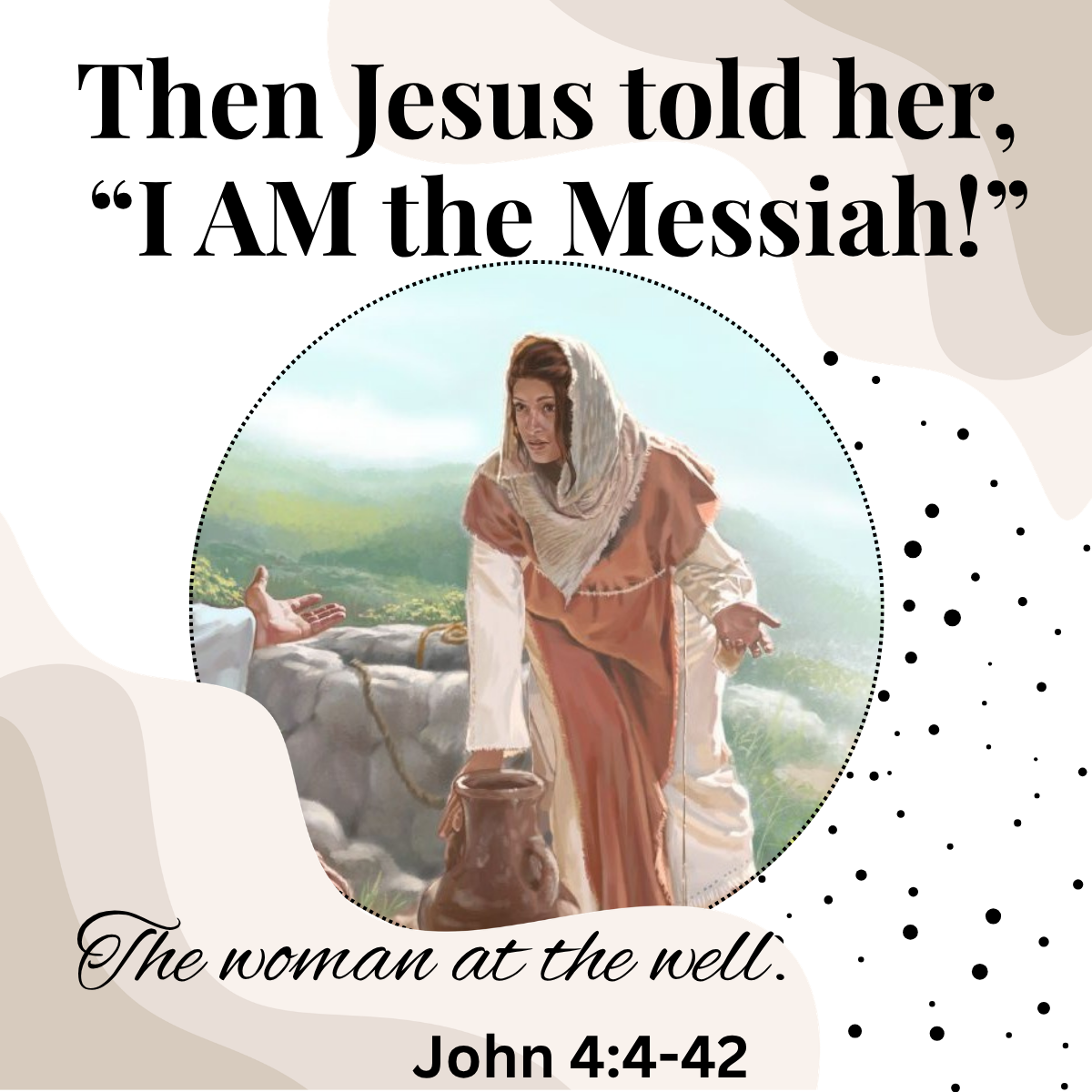
John 4:26, 29 [NLT] 26 Then Jesus told her, "I AM the Messiah!" ... 29 "Come and see a man who told me everything I ever did! Could he possibly be the Messiah?"

Jesus saw the woman at the well for more than her list of sins and mistakes. He saw past her pain and shame. He knew her and love her anyway. It seems very likely that He knew her name and maybe even used it. But none of those who recorded the life of the Messiah for us bothered to use her name.

In the past, I’ve struggled with remembering names. I have to work at it, repeating the name over and over in my mind so that it sticks. I’ve also tried the association trick to help me remember a name by associating it with something I won’t forget.

It is important to know that God never forgets a name. He knows your name. He knows all the names of all the stars (See Psalm 147:4).

God never forgets a name. He never overlooks a child who meets Jesus at the well. You are destined for more – just like the woman at the well.

I welcome your comments and questions. You can write me in the comments section, or any time at Nancy@DynamicChristianMinistries.org

Destined for More: The Harlot

Some sins seem never to be shaken loose from our lives and reputations. Rahab was a harlot who earned a place with the Israelite people because of her bravery in protecting the spies when they came to spy out Jericho before attacking it.

I’ve seen some try to propose that Rahab was just an inn keeper. If that were the case, that the Hebrew word translated “harlot” could have been “inn keeper”, I have a couple of questions.

1.        Why don’t we see this Hebrew word “zana” that is translated “harlot”, “whore”, and “whoredom” ever applied to another “inn keeper” in all of the Old Testament?

2.        Why did James, the half brother of our Lord Jesus the Christ, choose the Greek word for harlot when writing about Rahab? Surely, James had the ability to use inn keeper (or “host” as in Luke 10:35)

No, there is just no two ways about it, Rahab was everything that the word harlot implies.

She was also gutsy and bold. Because she was, she saved the Israelite spies.

I think Rahab saw just one desperate, risky opportunity and grabbed it. She took a big risk, not knowing how she would be treated by the Israelites, but willing to at least trust them and, more importantly, their God, with the lives of her family.

But Rahab was destined for something more that being “the harlot”. She was destined to be something more even than the gutsy who trusted the God of Israel and the Israelite spies she saved. God had bigger plans.

Rahab was destined to be in the lineage King David and of Jesus. She married a man named Salmon, they had Boaz, who married Ruth. Boaz and Ruth’s son, Obed, had a son named Jesse who was the father of David the king. Generations later, Jesus came from that human lineage.

Further, God would later commend her faith, and list Rahab among the faithful in Hebrews 11, along with Abraham, Isaac, Jacob, Joseph, and Moses. She is the only woman who is listed by name in the faith chapter.

You can find Rahab’s story in the book of Joshua, chapters 2 and 6.

God plucked this woman out of obscurity and thrust her into fame as someone who trusted the God she had only heard about.

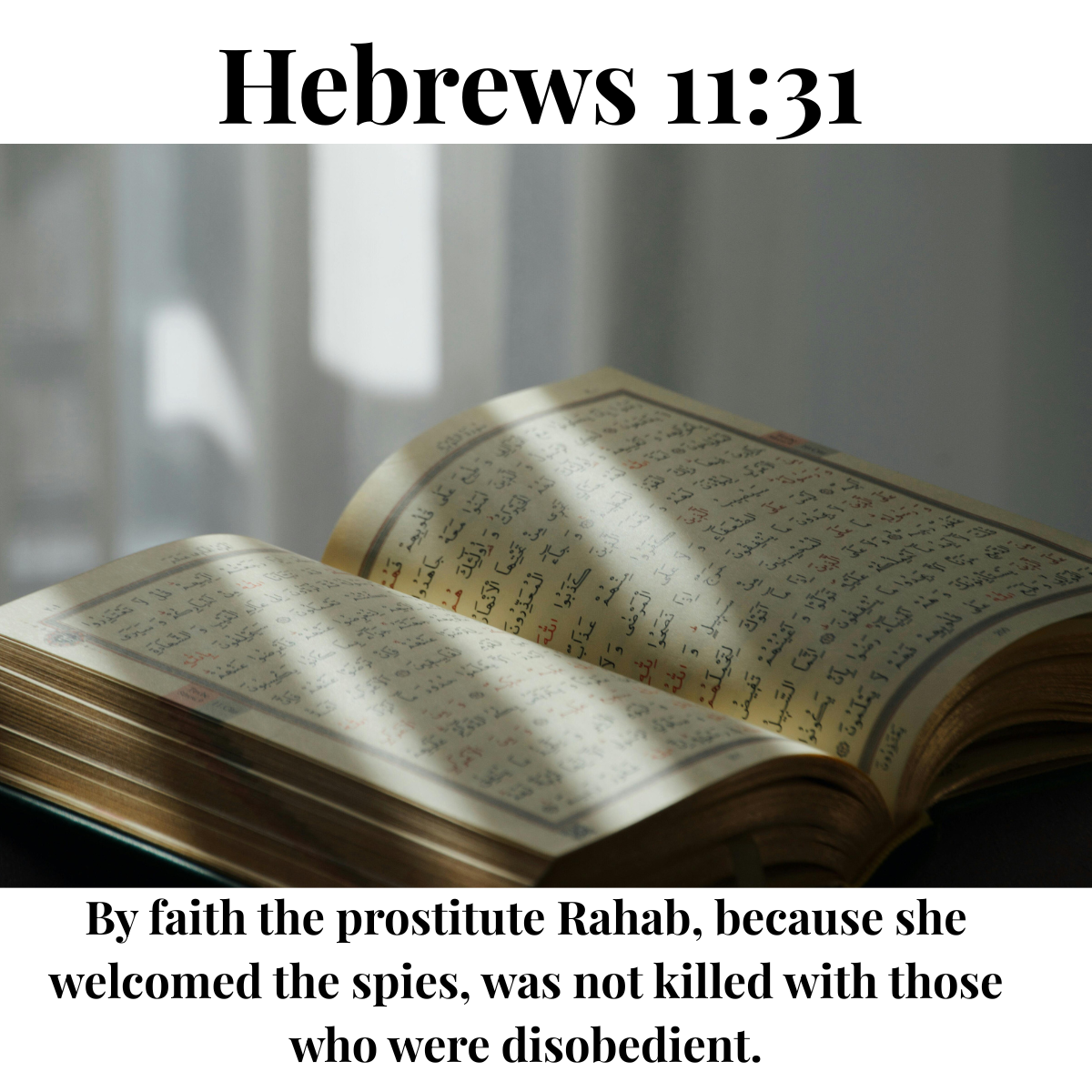
Hebrews 11:31 [NIV] 31 By faith the prostitute Rahab, because she welcomed the spies, was not killed with those who were disobedient.

Sweet sisters, if we have that kind of faith – faith that believes with no reason to do so – faith that is active and bold – we too can be assured that we will be numbered with the faithful.

God has so much for us – so many more opportunities and blessings – than we can likely imagine. Let’s not limit ourselves or our God by our current circumstances.

When the call for active, believing faith comes to us, let’s step out and take faith by the horns, acting as though the promises of God are guaranteed (as they are).

In a world tempted to limit God, we can rest assured that His plans, His blessings, His calling, and our purpose are unlimited.

I welcome your comments and questions. You can write me in the chat or any time at Nancy@dynamicchristianministries.org

Destined for More: Hannah

Quite often, maybe always, God sees us as more than what we appear to be to ourselves and others. People make determinations about who we are or what our potential is without taking into account the plans of God. That’s a mistake.

The world saw Hannah as a barren woman. So, did her husband, Elkanah, and his other wife, Peninnah. After all, Peninnah had many children, while Hannah had none. Hannah, was not will to accept that designation. She desired more.

When she went to the temple to pray, the high priest saw her as a drunk. God saw her humility and earnest petition, and He responded.

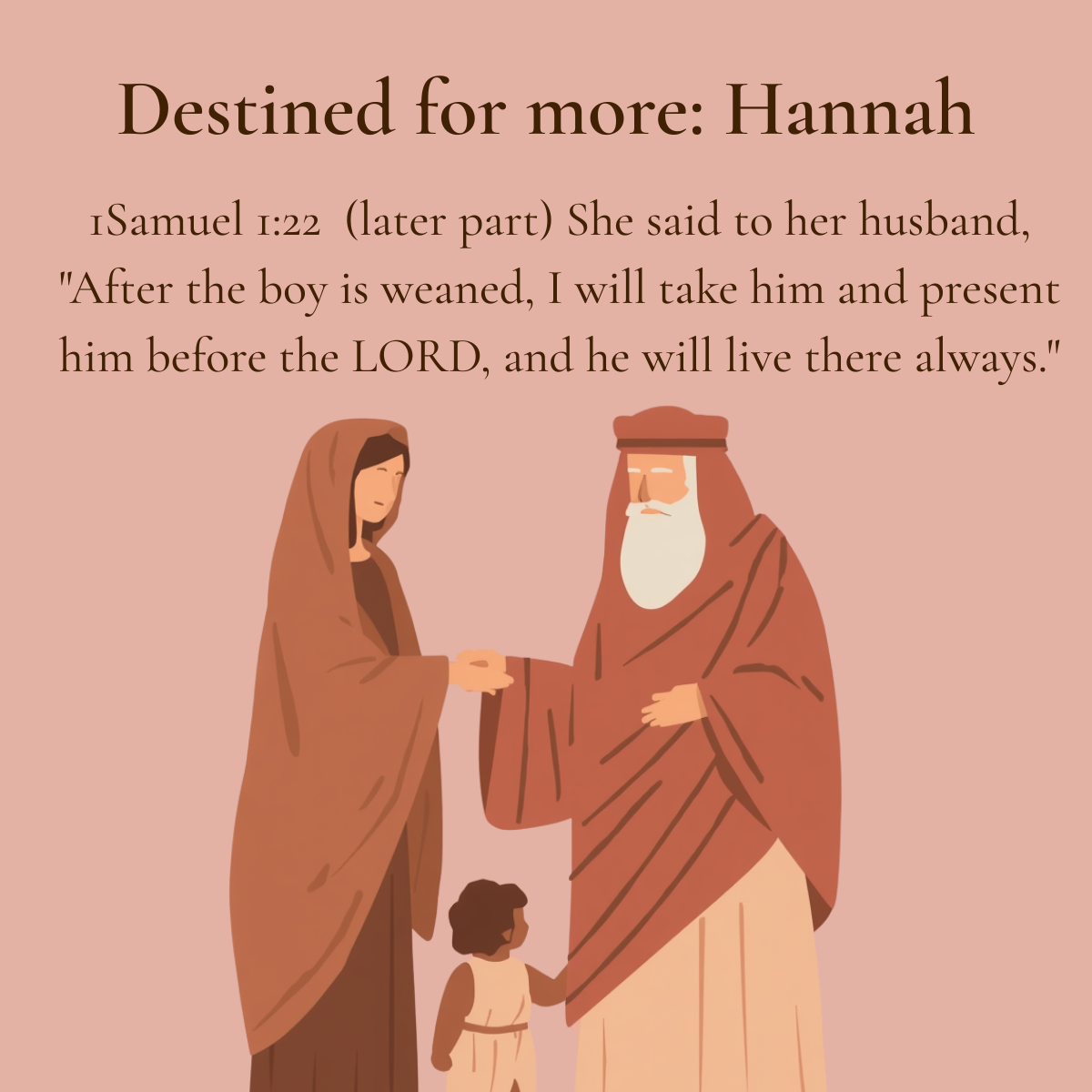
1 Samual 1:20 [NIV] So in the course of time Hannah became pregnant and gave birth to a son. She named him Samuel, saying, "Because I asked the LORD for him."

God heard Hannah’s cries and blessed her with a son. But Hannah was not content with the title of mother either. She had a plan to serve – to sacrifice to – God in a way that few mothers would have had the courage to do.

After she had weaned her son, Samuel, she sacrificed him to God. Not by killing him, but by turning him over to the service of the Lord and to Eli, the high priest at that time. That was a bold move for a mother who had waited so long for a child. That was a huge sacrifice.

But Hannah did not look at it as losing her son. Instead, she saw it as an honor to have a son to give to the Lord. Incredibly, her husband let her make that decision, trusting her to do what seemed right to her. [See 1 Samuel 1:23]

God had big plans for Samuel to, audibly calling Samuel into His service when Samuel was only a young boy, and revealing to him the fate of Eli and his sons. That is a LOT to put onto the shoulders of a young person.  

God did not see Samuel as a mere page to Eli, but as Eli’s replacement. God did not see Samuel as only the longed for son of a baren woman, but as His own chosen servant.

Hannah seems to have sensed that God had bigger plans. Why else would she have made such a dramatic sacrifice?

God did not see a baren woman. He saw the mother of His next High Priest, who would guide, judge, warn, pray for, and love God’s people as God did.

God did not see a baren woman. He saw a woman of great bravery and generous thanks. He saw a dedicated and willing servant.

1 Samual 1:20 [NIV] So in the course of time Hannah became pregnant and gave birth to a son. She named him Samuel, saying, "Because I asked the LORD for him."

Never let anyone limit your future or your place in the Kingdom of God because of your current circumstances. God sees what we cannot. And what He sees in us, He will help us to accomplish.

What inaccurate title are you wearing, sweet sisters? Ask God to show you who you really are. Then, like Hannah, bravely walk into the destiny the Father has reserved for you.

I welcome your comments and questions. You can write me in the comments section, or any time at Nancy@DynamicChristianMinistries.org

Destined for More: Naomi and Ruth

The Old Testament is, in part, a story of the plan for and the lineage of Jesus our Messiah, wrapped around the lives of significant and influential people. If you haven’t realized the pivotal roles women played in this process, it might be time to look more closely at the stories of women featured in the Old Testament.

This series, Destined for More, is not primarily about women or the Old Testament. It is about people who whose lives became more and had greater impact than anyone might have realized they could.

So, today I want to focus on a pair of women who played crucial roles in shaping the lineage of Jesus, though then never could have seen it coming, given their own lowly life circumstances.

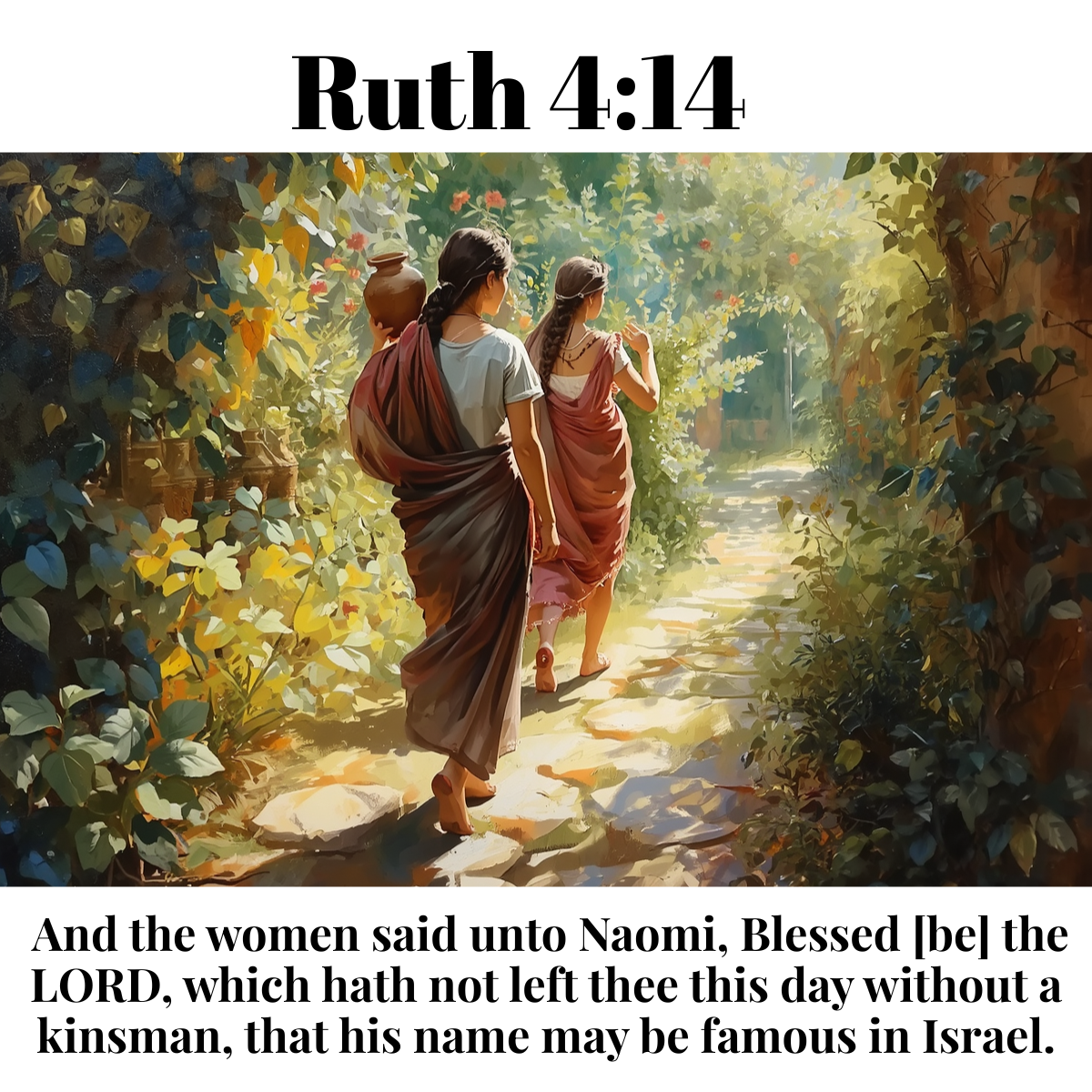
I’m talking about Naomi and Ruth – a poor Israelite widow and her Moabitess daughter in law, Ruth.

These were scrappy, can-do women. They each showed enormous faith in the God of Israel in their time of need.

After the death of her husband and two sons, Naomi was left with nothing to her name but a sad story of loss in a foreign country. So, she decided to go home, where help was available through the laws God setup about caring for widows and the fatherless. She had faith that she would be provided for once she got back to the Lord’s people.

But God had give Naomi an invaluable gift: a daughter-in-law who loved her and felt the call of Naomi’s God to provide for the mother of her late husband.

The two widows journeyed back to Naomi’s home town, and took their places in the history of our Messiah’s bloodline. She was destined to raise the great, great… (not sure how many greats) grandfather of Jesus.

God would take her from wife to widow to wife, from poor gleaner in the fields of a wealthy man to mistress of that wealthy household.

You can read the full story in the book of Ruth. (One of only two books in the Bible that is named for women. That is something.)

We don’t know what God has in store for our mortal lives or for the impact He will make on this earth through our lives. Sweet sisters, I encourage you to never limit His love, provision, calling, or plan  based on your current circumstances, based on how others would label you, or even the limitations your own natural abilities.

God is the sole arbiter of your destiny. And He has destined you for so much more.

I welcome your comments and questions. You can write me in the comments section, or any time at Nancy@DynamicChristianMinistries.org

Destined for More: Stephen

The early New Testament church era was a unique time. The Holy Spirit set upon the church in a visible performance of endowing them with its power and presence. Through the indwelling of the Spirit, the Apotles performed miracles, suddenly spoke in foreign tongues, and were miraculously freed from prison. A couple who lied to Peter dropped dead. Powerful stuff.

Acts 7:60 [KJV] And he kneeled down, and cried with a loud voice, Lord, lay not this sin to their charge. And when he had said this, he fell asleep.

Apparently, the 12 disciples also felt tasked with overseeing the care of widows – “serving tables”, as they called it. I hope they didn’t also feel it was their job to empty the trash and sweep the floors.

In the church I grew up in, anyone could clean, but the role of deacon one you could aspire to if you truly wanted to help serve widows, plus hand out songbooks, and keep a watchful eye on the behavior of the rest of the congregation during the service.

Back to the early New Testament. Groups of brethren complained that their widows were being neglected by the 12. Ya think?! I mean, these guys were busy preaching the gospel, being imprisoned and beaten, casting out demons, healing the sick, and being grilled by the authorities.

This is a lesson in learning to delegate, but I will leave that for another time. The apostles decided they would look for seven men “of honest report, full of the Holy Spirit and wisdom”. They were not about to just let any warm body take care of the widows. I like that, but I digress again.

Stephen, a man full of faith and the Holy Spirit was one of seven men chosen to serve in this role.

Luke, the author of Acts, felt it was important to expressly state that Stephen was “full of faith and the Holy Spirit”. Even though we should assume it was true of the other six, after all it was part of the job requirements, Luke seemed to be making sure we understand just what kind of man Stephen was.

And the 12 thought, “hey, this guy could serve tables”. I’m not knocking the service of widows. God tasks us all with taking care of the less fortunate. I’m just wondering why the apostles did not think, “Here is a man who could be sent out as Jesus sent us out.”?

Fortunately, God had something else in mind for Stephen. He brought Stephen to everyone’s attention as a being a man full of faith and the Holy Spirit” because he was destined for something so much more.

Stephen served where he was placed by the leaders. I think, given what we know about his character, it is safe to assume that he served gladly in this job – until God used him for more.  

Acts 6:8,10  [KJV] And Stephen, full of faith and power, did great wonders and miracles among the people…v.10 And they were not able to resist the wisdom and the spirit by which he spake

God had a plan for Stephen to give a powerful testimony for and of Jesus. Read all of Acts 7 – Stephen’s defense. Stephen knew the scriptures. He knew the power and the testimony of Jesus. Starting with Abraham he outlined the plan of God and the rebellion of His chosen  people.

Those listening were “cut to the heart”. But rather than responding with humility and repentance, the stoned him.

In a powerful testimony of God’s pleasure with Stephen’s witnessing, Stephen “saw the glory of God, and Jesus standing on the right hand of God”. When he spoke honestly of what he say, the crowd became enraged and stoned Stephen.

But Stephen was not yet finished showing the crowd the difference between one who is broken by God into humble service, and they their own stiff-necked refusal to bow before the Son of God.

Acts 7:60 [KJV] And he kneeled down, and cried with a loud voice, Lord, lay not this sin to their charge. And when he had said this, he fell asleep.

Do you ever feel like people don’t recognize your qualifications for the more prestigious jobs? After all, a man like Stephen could have been used to preach, surely. Do you sometimes feel that your talents are not valued or even recognized?

Maybe Stephen did too.

Stephen’s witness is short-lived, but powerful. Ordained to serve the widows, he was destined for a witness and testimony against the leaders of his generation.

Sweet sisters, never ever be tempted to believe that God does not have something important for you. He sees your talents and willingness in a way others may not. It is He alone who settles the plans for your life when you submit to Him.

Proverbs 19:21 [ESV] Many are the plans in the mind of a man, but it is the purpose of the LORD that will stand.

God’s purpose for your life stands far about any limitations you or others would place on your life.

I welcome your comments and questions. You can write me in the comments section, or any time at Nancy@DynamicChristianMinistries.org

Keep in Step with the Spirit 8

Romans 3:10-18 offers a pretty strong indictment of mankind. Verse 12 says,  They are all gone out of the way, they are together become unprofitable; there is none that does good, no, not one.

The scriptures are clear that no human is good. Mark 10:18 [NIV] “Why do you call me good?” Jesus answered. “No one is good—except God alone”.

1 Thessalonians 5:19 [NIV] puts it this way, “Do not quench the Spirit”.

So, staying in step with the Spirit by showing goodness in our lives is kind of a heavy lift. Yet our key scripture requires just that.

Galatians 5:22-23 [NIV] 22 “But the Holy Spirit produces this kind of fruit in our lives: love, joy, peace, patience, kindness, goodness, faithfulness, 23 gentleness, and self-control. There is no law against these things!”

An important point in staying in step with the Holy Spirit is that it is not us, not our own natures or by our efforts that we become aligned with the Spirit. It is the Holy Spirit in us that makes producing the fruit of the spirit possible. No amount of effort on our own will get us there. Our job, then, is to let the Spirit do its work in and through.

1 Thessalonians 5:19 [NIV] puts it this way, “Do not quench the Spirit”.

The call to produce goodness is where perhaps this is most evident since the scripture clearly says no one is good but God. However, as Galatians 5 makes it clear – it is the fruit of the Spirit we are seeking to produce.

Therefore, it all boils down to this (if I could paraphrase a bit): it all boils down to just letting the Spirit do its work in and through us. Don’t resist it. Don’t quench it. Anything else would be like asking Siri to navigate to an important destination and then completely ignoring her direction or, worse, doing the opposite.

I welcome your comments and questions. You can write me in the comments section or any time at Nancy@DynamicChristianMinistries.org

Keep in Step with the Spirit 7

We’ve been covering how to stay in step with the Spirit by going through the fruit of the Spirit.

Galatians 5:22-23 [KJV] 22 But the fruit of the Spirit is love, joy, peace, longsuffering, gentleness, goodness, faith, 23 Meekness, temperance: against such there is no law.

For this blog, I want to jump over goodness and talk about faith. The New International Version (NIV) of the Bible uses the word “faithfulness”, but the King James Version (KJV) uses “faith”.

Ephesians 2:8 [NKJV] For by grace you have been saved through faith, and that not of yourselves; [it is] the gift of God,

In my opinion, these are two very different things - having faith versus being faithful (or exhibiting faithfulness). According to the Strongs Concordance, based on the original Greek word, the KJV has it right.

I also believe that one cannot be faithful to God, to the scripture, to the Spirit, unless one has faith in them.

All of what we are called to do and to become hinges on having faith that what is promised to us will come to pass. Otherwise, why do the hard work of changing? Why give up our old and natural way of sin?

Hebrews 11:6 [NIV] And without faith it is impossible to please God, because anyone who comes to him must believe that He exists and that He rewards those who earnestly seek him.

It takes faith to be saved, to overcome sin and adversity, and to do the work required of us. You can check out Hebrews 11 for a litany of faithful examples.

We are justified by faith. Galatians 2:16 [NIV] “know that a person is not justified by the works of the law, but by faith in Jesus Christ. So we, too, have put our faith in Christ Jesus that we may be justified by faith in Christ and not by the works of the law, because by the works of the law no one will be justified.

We are healed by faith. Many, many times Jesus told those who came to Him for healing that it was their faith that caused or allowed that healing. [Examples Luke 7:50, 8:48; 17:19; 18:42]

And it only takes a tiny little bit of faith to do great things. [See Matthew 17:20 and Luke 17:6]

We do not need to worry about stirring up or striving to acquire faith. God gives it to us.

Ephesians 2:8 [NKJV] For by grace you have been saved through faith, and that not of yourselves; [it is] the gift of God,

Faith is the fruit we need to please God and to accomplish the works we are given to do. It is an important part of walking in step with the Spirit.

I welcome your comments and questions. You can write me in the comments section or any time at Nancy@DynamicChristianMinistries.org

Keep in Step with the Spirit 6

In this series on keeping in step with the Spirit by bearing the fruit of the spirit, we have come to the fruit of kindness.

Galatians 5:22-23 [NIV] 22 “But the Holy Spirit produces this kind of fruit in our lives: love, joy, peace, patience, kindness, goodness, faithfulness, 23 gentleness, and self-control. There is no law against these things!”

It might be good at this point to remind ourselves that our goal is to become more like Jesus – more like the Father [See John 15:9, 12 and Matthew 5:48]. So, the good news for us is that God is or exhibits the things that we are asked to also exhibit in our lives.

Romans 11:22 [NIV] Consider therefore the kindness and sternness of God: sternness to those who fell, but kindness to you, provided that you continue in his kindness… God is kind.

Ephesian 2:7 [NIV] in order that in the coming ages he might show the incomparable riches of his grace, expressed in his kindness to us in Christ Jesus.

Many other scriptures using the word kindness are about the kindness that God has shown to us.

2 Peter 1:5-7 [KJV] shows us that kindness is something that is built upon other godly characteristics and Christian practices, like faith and knowledge and patience. 5 And beside this, giving all diligence, add to your faith virtue; and to virtue knowledge; 6 And to knowledge temperance; and to temperance patience; and to patience godliness; 7 And to godliness brotherly kindness; and to brotherly kindness charity.

On of my favorite scripture about kindness is Colossians 3:12 [NIV] Therefore, as God's chosen people, holy and dearly loved, clothe yourselves with compassion, kindness, humility, gentleness and patience.

Romans 11:22 [NIV] Consider therefore the kindness and sternness of God: sternness to those who fell, but kindness to you, provided that you continue in his kindness…

Kindness is something for us to clothe ourselves in, along with compassion, humility, gentleness and patience. Again, the scripture seems to indicate that kindness does not stand alone. To me, this indicates that without qualities like humility, compassion, and patience make it easier for us to show or maybe are required for us to show kindness to others. Humility, compassion, and patience are things you have. Kindness is something you show. It seems to me that it is logical and accurate to say that our ability to show kindness is dependent on being humble (knowing that we also sin and stumble), being compassionate (knowing that others struggle too), and being patient (with the struggles and faults of others – just as we hope others will be with our own).

This reminds me of a couple of sayings I learned from two of my favorite authors – sayings which help me to stay humble, compassionate, patient, and kind. Brene Brown taught me that “Everyone is just doing the best they can with the baggage they carry and the day they are having”. MK Mueller taught me that “we are all half jerk and half jewel”.

We are all fighting to become better versions of ourselves. Our God is kind to us in our struggles because He knows our frailty. [See Psalm 103:13-14]

It makes sense that He’d ask us to keep in step with the Holy Spirit by showing kindness to those who struggle along with us.

I welcome your comments and questions. You can write me in the comments section or any time at Nancy@DynamicChristianMinistries.org

Keep in Step with the Spirit 5

In this series, we are covering the fruit of the Holy Spirit as a way to mark whether or not we are keeping in step with the Spirit.

Galatians 5:22-23 [NIV] 22 “But the Holy Spirit produces this kind of fruit in our lives: love, joy, peace, patience, kindness, goodness, faithfulness, 23 gentleness, and self-control. There is no law against these things!”

2 Corinthians 1:6 [NIV] If we are distressed, it is for your comfort and salvation; if we are comforted, it is for your comfort, which produces in you patient endurance of the same sufferings we suffer.

Have you ever heard someone say, “Lord give me patience – right away!” If only patience was something that just showed up, we’d all have it. Instead, we must accept that patience is that only comes with waiting. Otherwise, you don’t need it.

How important is patience to the Christian walk?

In Luke 21:5-19, Jesus outlines the terrible times the followers of Jesus will experience close to the end of this age, including being hated, persecuted, and imprisoned. And then He tells us, Luke 21:18-19 [NKJV] 18 "But not a hair of your head shall be lost. 19 By your patience possess your souls.”

The Greek word translated patience here means “hopeful endurance”. We are to have patience that is filled with hope. Clearly, something more than just gritting our teeth (metaphorically) and hanging on until the end.

Patience must be grounded in hope. And, since this segment is talking about the times of trial before Jesus returns, I think we can safely assume that the grounding hope that allows us to be patient through it all is the hope of His return being eminent.

Some of that hopeful patience seems to be based on knowing that because we have Christ in us, we have a hope for the future.

Colossians 1:27 [NIV] 27 To them God has chosen to make known among the Gentiles the glorious riches of this mystery, which is Christ in you, the hope of glory.

Some of that patient and hopeful endurance could be grounded in the fact that we share the same trials and sufferings, and we see others showing hopeful patience and endurance.

2 Corinthians 1:6 [NIV] If we are distressed, it is for your comfort and salvation; if we are comforted, it is for your comfort, which produces in you patient endurance of the same sufferings we suffer.

We have a lot to look forward to as Christians. And the good times will last for eternity. It can be hard to grasp the magnitude of eternity, but we know that looking back on the sufferings of this world from the vantage point of having received our hope of glory will shrink that suffering into insignificance[.

Romans 8:18 [NIV] I consider that our present sufferings are not worth comparing with the glory that will be revealed in us.

Now, that is worth patiently and hopefully waiting for as we walk in step with the Spirit.

I welcome your comments and questions. You can write me in the comments section or any time at Nancy@DynamicChristianMinistries.org

Keep in Step with the Spirit 4

We are working our way through the fruit of our lives that together help us to show that we are walking in step with the Spirit in our lives.

Galatians 5:22-23 [NIV] 22 But the fruit of the Spirit is love, joy, peace, forbearance, kindness, goodness, faithfulness, 23 gentleness and self-control. Against such things there is no law.

Romans 12:18 [NIV] If it is possible, as far as it depends on you, live at peace with everyone

Today, we tackle peace. The Word of God tells us to have peace, to seek peace, and to sew people. It is the all-purpose fruit.

We can have peace by loving God and remembering that we are called to Him for a purpose. But I think, even more so because we can know that, since He has called us for a purpose, that everything is working out to our good.  

Romans 8:28 [KJV] “And we know that all things work together for good to them that love God, to them who are the called according to [his] purpose.”

I feel there can be great peace in knowing that the trials of life are not for our destruction (although it can feel like they will destroy us) but are a part of God’s working everything toward our ultimate good.

Also, don’t worry, peace is not something that has to be worked up. Christ Jesus offers it to us.

Colossians 3:15 [NLT] And let the peace that comes from Christ rule in your hearts. For as members of one body you are called to live in peace. And always be thankful. We just need to let it rule within us.

We are told to seek it out. Psalm 34:14 [NIV] “Turn from evil and do good; seek peace and pursue it.”  But that seems to refer to seeking it with others, which clearly will be more work for us than it takes to have peace with God (since Jesus did the hard work for us).

Romans 12:18 [NIV] If it is possible, as far as it depends on you, live at peace with everyone. See, it’ll take work. We have to do our part to live at peace with others, but this scripture indicates if they aren’t willing it might not work.

1 Thessalonians 5:13 [NLT] Show them great respect and wholehearted love because of their work. And live peacefully with each other.

Those who walk in step with the Spirit will have peace in them, even in the midst of storms, and will proactively work toward peace with others.

And, perhaps most importantly, we will have peace with the Father because Jesus has paid our debt, taking away the animosity caused by our sins.

I welcome your comments and questions. You can write me in the comments section or any time at Nancy@DynamicChristianMinistries.org

Keep in Step with the Spirit 3

We could end the discussion of how to stay in step with the Spirit at the subject of love, because it is the greatest of all. (1 Corinthians 13:13) Love of God and love of fellow mail are the underpinnings of “all the law and the prophets”. (Matthew 22:40)

However, since Galatians 5 doesn’t stop with love, neither will I.

Let’s look at the full list now. Galatians 5:22-23 [NIV] 22 But the fruit of the Spirit is love, joy, peace, forbearance, kindness, goodness, faithfulness, 23 gentleness and self-control. Against such things there is no law.

Many of the qualities on the list are action items – we show love, give kindness, do what is good, exercise faith, etc.

Joy does not seem like something one does, rather something one experiences. The fact remains that, according to Galatians 5:22, those living in step with the Spirit are not “sour pusses” or “grumps”, rather, they produce joy. We are to be people of joy – in spite of trials and troubles, the condition of this world, and our struggles against our own sinning nature.

Joy in the midst of it all is a maker of being in step with the Spirit that dwells in us.

Our God is a god of joy. In Matthew 25, where the scripture talks about using our talents to serve, we find this in verse 21, "His lord said to him, 'Well [done], good and faithful servant; you were faithful over a few things, I will make you ruler over many things. Enter into the joy of your lord.'” [NKJV]

It is God’s “good pleasure” to give us the Kingdom of Heaven. Many other scriptures use those same words in outlining how God feels about bringing us into His family and into eternity with Him. The image of a sour god, preferring punishment over reward is way off base from what scripture tells us.

Matthew 5:21 ...“Enter into the joy of your Lord”

In Luke 10:20, Jesus tells the disciples to rejoice that their names are written in heaven.

The book of Nehamiah tells of a time when the Israelites heard the law of God being read to them, after being a long time without it. They reacted with mourning over their own sins and separation from these words. But that is not the reaction God wanted.

Nehamiah 8:9-12 [NIV] 9 “Then Nehemiah the governor, Ezra the priest and teacher of the Law, and the Levites who were instructing the people said to them all, "This day is holy to the LORD your God. Do not mourn or weep." For all the people had been weeping as they listened to the words of the Law. 10 Nehemiah said, "Go and enjoy choice food and sweet drinks, and send some to those who have nothing prepared. This day is holy to our Lord. Do not grieve, for the joy of the LORD is your strength." 11 The Levites calmed all the people, saying, "Be still, for this is a holy day. Do not grieve." 12 Then all the people went away to eat and drink, to send portions of food and to celebrate with great joy, because they now understood the words that had been made known to them.”

It seems to me that we often react with mourning when we understand ourselves to have been far from what God desires of us. However, this scripture leads me to see that our focus need not be on how far we are from obedience, but would be better placed on the joy of God’s mercy toward us in sending His Son to make us right with Him.

Staying in step with the Spirit means being joyful. Certainly, staying focused on what God has done and is doing for us, and reflecting on the joy it gives the Father to do so, can help us be people of joy.

I welcome your comments and questions. You can write me in the comments section or any time at Nancy@DynamicChristianMinistries.org

Keep in Step with the Spirit 2

We are on a journey of discovery, not about where we are going but about our companion on the path of life: the Holy Spirit.

I hope you are as interested as I am to explore the proof that our lives are in step with that Spirit, through the exploration of the kind of fruit a life of walking with the Spirit produces.

John 13:34 [NIV] “A new command I give you: Love one another. As I have loved you, so you must love one another.”  

While good deeds or good works do not produce salvation (only the death and resurrection of Jesus Christ can do that), they are an important indicator that we have faith.

Similarly, the fruit of the Spirit is not a list of deeds, but a list of attributes, points of character, that indicate the presence of the Spirit, which can only be evident in how we then act on them.

Galatians 5:22-23 [NIV] 22 But the fruit of the Spirit is love, joy, peace, forbearance, kindness, goodness, faithfulness, 23 gentleness and self-control. Against such things there is no law.

Love is the first fruit listed, and I would say that you cannot have any other fruit listed if you don’t have love.

Compare the fruit of the Spirit with the list of what love is, as outlined in 1 Corinthians13:4-8 [NIV] (I’ve underlined the attributes that seem to be the same as the list of the fruit of the Spirit and made notes throughout) 4 Love is patient (forbearance), love is kind (kindness). It does not envy, it does not boast, it is not proud. 5 It does not dishonor others, it is not self-seeking, it is not easily angered (self-control), it keeps no record of wrongs. 6 Love does not delight in evil but rejoices with the truth (joy). 7 It always protects (good), always trusts, always hopes, always perseveres (always = faithful). 8 Love never fails...

John 13:34 [NIV] gives us a direct command from Jesus about how love should show up: “A new command I give you: Love one another. As I have loved you, so you must love one another.”  And how did He love us? He healed. He fed. He taught. And then He covered our sins (our nakedness) when He died for us.

Saying we have love is not the point. The point is how love shows up in our lives.  Jesus spells it out for us in Matthew 25 with action words: “I was hungry and you fed me. I was thirsty and you gave me a drink. I was naked and you gave me clothing…”

Nothing has more value than love [See 1 Corin. 13:1-3], because love underscores every aspect of our Christian walk – both what we receive and what we are then to give out to others.

Jesus did not just have love, He acted out love, and He told us to do the same.

If we want to assess whether or not we are in step with the Holy Spirit, assessing if and how love shows up in our lives is the perfect place to start.

I welcome your comments and questions. You can write me in the comment section or any time at Nancy@DynamicChristianMinistries.org

Keep in Step with the Spirit 1

I was reading in Galatians a few weeks back in a different translation than I usually use. You probably know that Galatians 5, starting in verse 19, covers the deeds (or acts as the NIV has it) of the flesh. Then, it contrasts those with the fruit of the spirit in verses 22 and 23.

In this 8-part series, I will offer some thoughts on this section of scripture (Galatians 5: 19-25), beginning today with verse 25, “Since we live by the Spirit, let us keep in step with the Spirit”. [NIV]

This scripture is interesting to me because it says that we already live by the Spirit, rather than that we should live by the Spirit. But then it warns us to keep in step with that Spirit.

I like “keep in step with” because it evokes the idea of walking along side, or walking in harmony with the Spirit by which we live.

How is it that the scripture can say we already live by the Spirit?

Ephesians 2:1-9 explains to us that we were all dead in our sins or dead because of our sins. We were the proverbial “dead men walking”. It explains that this is because we were following the spirit of Satan. But we have been saved by the grace of God. [See Acts 8:15-19]

And at baptism, through the laying on of hands, we receive the Holy Spirit, which gives us new life. Real life. Eternal life. Life that counts.

John 6:63 [NIV] “The Spirit gives life; the flesh counts for nothing. The words I have spoken to you--they are full of the Spirit and life.”

We are then living in the Spirit because the Spirit has given us life.

So, what is the risk if we fall out of step with the Spirit and don’t make our way back? Hebrews 6:4-6 [NKJV] 4 For [it is] impossible for those who were once enlightened, and have tasted the heavenly gift, and have become partakers of the Holy Spirit, 5 and have tasted the good word of God and the powers of the age to come, 6 if they fall away, to renew them again to repentance, since they crucify again for themselves the Son of God, and put [Him] to an open shame.

So, sweet sisters, just as we know a tree by what it produces, we can know if we are in step with the Spirit by what we produce. [See Matthew 7:16-20]

In the coming blogs I’ll dive into what the Spirit in us produces. Understanding that “good works” are important, we will see that what the Spirit produces in us are not deeds, but character. [See James 2 for the importance of good works]

John 6:63 [NIV] “The Spirit gives life; the flesh counts for nothing. The words I have spoken to you--they are full of the Spirit and life.”

I hope you will join me on this journey – a journey of walking in step with the Spirit in us.

I welcome your comments and questions. You can write me in the comments section or any time at Nancy@DynamicChristianMinistries.org

Go for the Joy

Beth Moore (author and Bible teacher) and Elizabeth Gilbert (author of many books, including Eat, Pray, Love and Big Magic) walk into a coffee shop (because Beth would not go to a bar) and talk about your why (or why not).

Okay, I made up the meetup. It’s difficult to imagine these two actually connecting in person or in thought leadership.

However, recently I was doing my annual listen to Gilbert’s Big Magic on audio, reminding myself that creativity is its own reward.

[Mat 25:15 NKJV] 15 "And to one he gave five talents, to another two, and to another one, to each according to his own ability; and immediately he went on a journey.

Gilbert points out that we are all creative beings. Creating is what are born to do. I listen to remind myself that I can and should create for the joy of creating, not for adulation from others. My artwork will never be in the Louve. I should draw anyway, because it brings me joy. My dance moves will never be featured on America’s Got Talent, but dancing brings me joy and that is the purpose of dancing. You might enjoy creating a garden, performing music, figure skating, or something else. These pursuits never need bring you money or glory. Perhaps no one else will appreciate your singing at all. All that creative pursuits are meant to do is to bring you joy.

There will always be someone better than you at the thing you choose to do. Do it anyway.

In Beth Moore’s 4-part podcast titled “Most Talent”, she reminds us that our God-given talents are not to be done to seek accolades or glory for ourselves. We use our talents because that is what God created us to do. He equipped each of us with a talent or talents meant to be used. Using your talents brings God joy. It should bring us joy too.

There will always be someone who is a better speaker, podcaster, blogger, teacher, etc. than you.  Speak, podcast, blog, or teach anyway.

Probably nothing will happen if you never paint a flower again. But not using your God-given talents to serve God and His children has dire consequences. Jesus outlined exactly what could happen in the Parable of the Talents found in Matthew 25:14-30. The fear that you are not good enough is not an excuse not to do what you can with what you have been given.

Don’t let the fact that you might not be the best get in the way of doing (and hopefully enjoying) what God has called you to do.

Alternately, it is just as problematic if you are using your talents and/or serving others for self-glorification, to been seen as valuable or important, or to gain stature in the church or world. Matthew 23:1-12 warns against seeking to be seen as great for the service you do. See in particular, Matthew 23: 5-7 [NKJV] 5 "But all their works they do to be seen by men. They make their phylacteries broad and enlarge the borders of their garments. 6 "They love the best places at feasts, the best seats in the synagogues, 7 "greetings in the marketplaces, and to be called by men, 'Rabbi, Rabbi.'

Moore and Gilbert are aligned in this, just maybe from a different perspective and purpose in pointing it out.

So, sweet sisters, I encourage you to “go for the joy” in using what you have to serve those you can to the glory of the Father.

Matthew 6:3-4 [NKJV] 3 "But when you do a charitable deed, do not let your left hand know what your right hand is doing, 4 that your charitable deed may be in secret; and your Father who sees in secret will Himself reward you openly.”

Your “why” need only be that you have the means or the talent or the calling and you intend to us it. It’s a talent, but it is not a talent contest, and it certainly is not a competition.

I welcome your comments and questions. You can write me in the comment section or any time at Nancy@DynamicChristianMinistries.org

Do As I Say, Not As I Do.

I was reading the book of Philemon this morning. In this book Paul writes a personal letter to Philemon. But even if Paul didn’t know it would become part of the New Testament, he knew that it would be read before the church in Philemon’s home.

As with any writing, it is hard to be sure of the tone or feelings behind the words. However, it seems to me that Paul is being a little manipulative. Read it for yourself and see if you don’t agree with me.

The points Paul makes about Onesimus, a former slave, now being a brother in Christ, and worthy of being treated differently rings true. It reminds me of Galatians 3:28 “There is neither Jew nor Greek, there is neither slave nor free, there is neither male nor female; for you are all one in Christ Jesus”. See also Colossians 3:11

I’m just not convinced we should imitate his methodology on it.  

My dear sisters, that brings me to my point. I believe we must always be careful to follow teachings and principals but remember that not every example in the Bible is an example we should follow.

No one believes, for instance, that if some evil men want to do bad things to your male guests, it is okay to push a woman out the door so they can abuse her to death overnight instead. (Judges 19:20-28)

I have heard people use the example of Jesus overturning tables in the temple to justify fits of anger… er, righteous indignation. I’ve known church leaders to use the fact that Revelation 19:15 says Jesus will “rule them with a rod of iron” as justification for being “iron rodded” in how they treat their congregations. That’s not the point.  

Anyone of us can fall into the trap of following something as behavior we should imitate rather than simply a lesson we should learn. We should be careful about following anything that we are not specifically told “this is something you should do”.

We might practice asking ourselves. “is this a follow scripture/story or a learn scripture”?

Luckily, we do have many very specific commands to follow people, behavior, attitudes, etc. Here are some examples:

Follow righteousness. 2 Timothy 2:22

Follow peace. Hebrews 12:14

Follow good. 3 John 1:11

Follow Christ’s example of suffering. 1 Peter 2:21.

And, of course, Jesus, many times, said, “follow me”. And if we focus on following Him, then Revelation 14:4 can be said about us, “These are the ones who follow the Lamb wherever He goes. These were the redeemed from among men, being first fruits to God and the Lamb”.

I welcome your comments and questions. You can write me in the comment section or any time at Nancy@DyanmicChristianMinistries.org.

Restored Losses

Mark 10:29-30 [NKJV] 29 So Jesus answered and said, "Assuredly, I say to you, there is no one who has left house or brothers or sisters or father or mother or wife or children or lands, for My sake and the gospel's, 30 "who shall not receive a hundredfold now in this time--houses and brothers and sisters and mothers and children and lands, with persecutions--and in the age to come, eternal life.”

This is a promise to restore our losses, when that loss is because of Jesus or the Gospel.

Job lost a LOT – all of his children, servants (except a few), livestock and health. God did not restore those children, that livestock, and those servants. Yet we are told that God restored his losses.

Job 42:10,12,16 [NKJV] 10 And the LORD restored Job's losses when he prayed for his friends. Indeed the LORD gave Job twice as much as he had before…12 Now the LORD blessed the latter [days] of Job more than his beginning; for he had fourteen thousand sheep, six thousand camels, one thousand yoke of oxen, and one thousand female donkeys. ... 16 After this Job lived one hundred and forty years, and saw his children and grandchildren [for] four generations.

David lost his first son from Bathsheba. God did not restore that child. But he and Bathsheba were comforted with a new son – Solomon.

Mark 8:35 [NKJV] For whoever desires to save his life will lose it, but whoever loses his life for My sake and the gospel's will save it.

This is a promise that if we give up our lives, we will get those lives back. But the dead in Christ, those martyred for the Word, did not come back to their mortal lives. We give our lives to Christ not only in martyrdom for the Gospel, but also when we give it over to doing the will of God, instead of our own. He doesn’t give us back the hours given over to service.

Mark 10:29-30 [NKJV] 29 So Jesus answered and said, "Assuredly, I say to you, there is no one who has left house or brothers or sisters or father or mother or wife or children or lands, for My sake and the gospel's, 30 "who shall not receive a hundredfold now in this time--houses and brothers and sisters and mothers and children and lands, with persecutions--and in the age to come, eternal life.”

Just like God replaced Job’s children, herds, and money; just like Solomon replaced the dead child, all that we give up for and over to the service of God and Christ, to the work of the Gospel, is replaced by something entirely different.

So, when we read in Luke 6:38 [NKJV] "Give, and it will be given to you: good measure, pressed down, shaken together, and running over will be put into your bosom. For with the same measure that you use, it will be measured back to you."  We can be thankful that God promises to out give us. But we should not expect that we will get back exactly what we give.

We might give money and get back an abundance of hope, rather than a winning lottery ticket. For example, we may give forgiveness but get back an abundance of patience, rather than reciprocal forgiveness. We might give comfort and get back an abundance of trust.

God is not in the business of restoring exactly what we lost. He is in the business of replacing what we lost with more or better, or both. He is in the business of accepting our meager, human, temporary lives, money, hearts, hopes and sacrifices, and replacing them with something of infinitely greater value.

When we get this, we see something different than a health and wealth Gospel in reading Mark 10:29-30.

If your children or your parents refuse to have anything to do with you because of your faith, God may restore them to you, or He may give you a congregation with scores of young people who are like your own children, or older women who “mother” you. You may lose your child to cancer and then adopt a family of three out of the Foster Care system who need loving parents.

You may lose your dream job but gain one that allows you more time to serve God and His people.

I guess my point is that restoration from God is often not a return of what was lost, but a replacement with something God, in His infinite wisdom and perfect plan, has chosen instead. And we have to trust that – trust Him – when we oh so badly want back that child, that marriage, that job, etc.

Matthew 7:11 [NKJV] If you then, being evil, know how to give good gifts to your children, how much more will your Father who is in heaven give good things to those who ask Him!

The restoration is gonna be good. God promises. We just have to be open to His vision of restoration for us.

I welcome your comments and questions. You can write me in the chat or any time at Nancy@DynamicChristianMinistries.org